

Farm workers in North Carolina face injury risks from heavy equipment, repetitive labor, chemical exposure, and extreme conditions. North Carolina is one of the leading states for agricultural production and employs a large number of seasonal and migrant farm workers. Injured workers may qualify for compensation depending on employer coverage and classification. Understanding eligibility, reporting requirements, and available legal options is critical, especially when claims are denied or disputed.
How an Accident Can Impact Your Life
Agricultural work is one of the most physically demanding and hazardous industries in North Carolina. Workers are exposed to heavy machinery, long hours, extreme weather, and repetitive labor that can lead to serious injuries. In and around Winston-Salem, farm workers play an essential role in supporting local and statewide agriculture.


Call Now (336) 470-0177
Available 24/7 Free Case Review
North Carolina consistently ranks among the top agricultural states in the country and is a major employer of seasonal and migrant farm workers. Many of these workers travel from other regions or countries under temporary work programs, often performing physically demanding labor under challenging conditions.
When an injury occurs, the situation can quickly become complicated. Workers may be unsure of their rights, whether they are covered under workers’ compensation laws, or what steps to take next. Language barriers, employment classification, and fear of retaliation can also make it harder to seek help.
Bowman Law PLLC works with injured workers across Winston-Salem and helps individuals understand their rights, evaluate their options, and take steps to pursue compensation where available. If you have been injured while working in agriculture, calling (336) 470-0177 can help you understand what may apply to your situation.
Agricultural Work and Injury Risks in North Carolina
North Carolina’s agricultural industry includes tobacco, sweet potatoes, poultry, and other large-scale operations. These jobs require physical labor and often involve exposure to conditions that increase the risk of injury.
Common risk factors include:
- Operating or working near heavy machinery
- Repetitive physical labor such as planting, harvesting, or lifting
- Exposure to pesticides and chemicals
- Working in extreme heat or weather conditions
- Long shifts with limited breaks
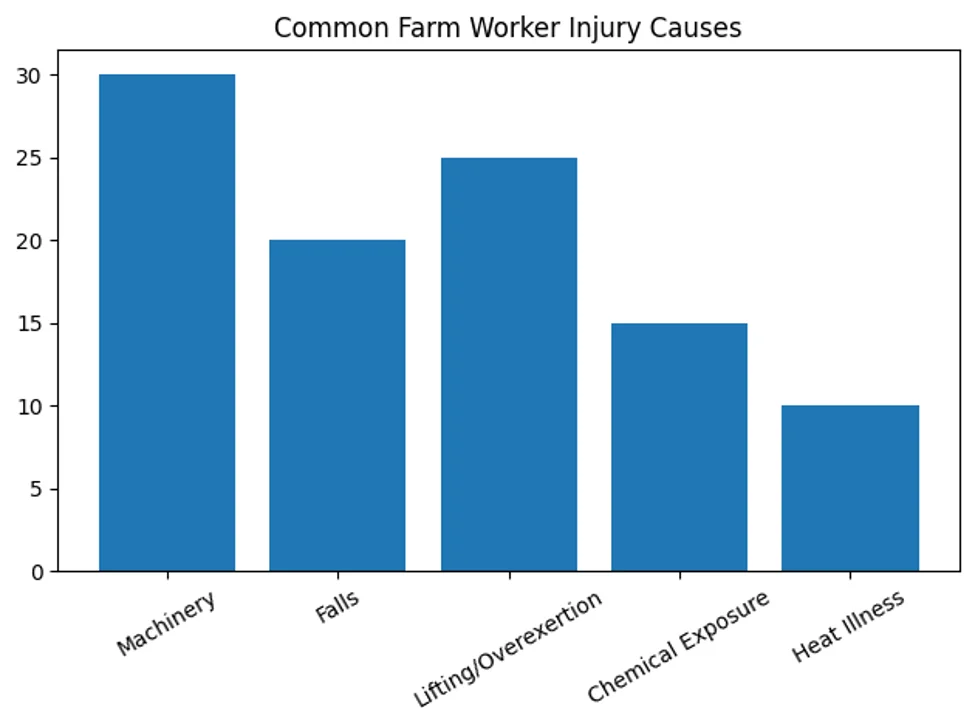
Farm workers are often expected to perform physically demanding tasks for extended periods, which increases the likelihood of both sudden injuries and long-term conditions.
Common Types of Farm Worker Accidents
Farm-related injuries can occur in a variety of ways, depending on the type of work being performed.
Some of the most common accident types include:
- Machinery accidents involving tractors or equipment
- Falls from equipment, ladders, or uneven terrain
- Injuries caused by tools or sharp equipment
- Chemical exposure incidents
- Transportation-related accidents involving farm vehicles
These accidents can result in serious injuries, particularly when safety measures are limited or conditions are difficult.
Types of Injuries Farm Workers Experience
Farm workers may suffer injuries that affect their ability to continue working or require long-term care.
Common injuries include:
- Back and spinal injuries from lifting or repetitive motion
- Fractures and joint injuries from falls or equipment accidents
- Cuts, lacerations, and crush injuries
- Respiratory issues from chemical exposure
- Heat-related illnesses and dehydration
Some injuries develop gradually over time, especially those related to repetitive labor or chemical exposure. These cases can be more difficult to document and may be challenged more frequently.
Workers’ Compensation and Farm Workers in North Carolina
Workers’ compensation laws in North Carolina do not apply the same way to all farm workers. Coverage depends on factors such as the employer’s size and the nature of the work.
In general:
- Agricultural employers with fewer than 10 employees are often exempt from mandatory workers’ compensation coverage
- Larger agricultural operations may be required to carry coverage
- Employment classification can affect eligibility
Because of these exceptions, some injured farm workers may not be covered under traditional workers’ compensation laws. However, this does not necessarily mean there are no legal options available.
Understanding whether your employer is required to provide coverage is an important first step.
Migrant and Seasonal Farm Worker Considerations
North Carolina is one of the leading states for migrant farm labor, with thousands of workers entering the state each year under seasonal work programs such as the H-2A visa program.
These workers often face additional challenges, including:
- Limited access to information about legal rights
- Language barriers
- Concerns about job security or retaliation
- Unfamiliarity with the legal system
Importantly, immigration status does not automatically prevent a worker from pursuing compensation for a workplace injury. Many workers still have legal protections, depending on the circumstances of their employment.
Understanding these rights is critical, especially when employers or insurers attempt to discourage claims.
Steps to Take After a Farm Work Injury
Taking the right steps after an injury can help protect your ability to recover compensation.
You should:
- Report the injury as soon as possible
- Seek medical attention immediately
- Document how the injury occurred
- Keep records of treatment and symptoms
Even if you are unsure whether workers’ compensation applies, documenting the incident is important. Delays or a lack of documentation can make it harder to pursue a claim later.
Challenges Farm Workers Face in Injury Claims
Farm workers often face unique challenges when pursuing compensation.
These may include:
- Questions about whether workers’ compensation applies
- Disputes over employment status
- Lack of documentation or reporting
- Language or communication barriers
In some cases, workers may be discouraged from reporting injuries or may not be informed of their rights. These factors can make it more difficult to pursue a claim, even when the injury is serious.
What Happens If You Are Not Covered by Workers’ Compensation
If workers’ compensation does not apply, other legal options may still be available depending on the circumstances.
This can include situations where:
- An employer failed to provide required coverage
- A third party contributed to the injury
- Unsafe working conditions were involved
Each case depends on specific facts, and evaluating these options requires a careful review of how the injury occurred.
How a Winston-Salem Farm Worker Accident Lawyer Can Help
Farm worker injury cases often involve additional complexity compared to other workplace injuries. Coverage issues, employment classification, and documentation challenges can all affect the outcome.
An attorney can help by:
- Reviewing your situation to determine what laws apply
- Identifying potential sources of compensation
- Gathering evidence to support your claim
- Communicating with employers or insurers
Call Now (336) 470-0177
Available 24/7 Free Case Review
Bowman Law PLLC works with injured workers in Winston-Salem and has experience handling workplace injury cases and disputes. Attorney Joe Bowman helps clients understand their options and take steps to move forward.
The Role of State and Federal Oversight
Farm worker safety and compensation issues may involve both state and federal considerations. While the North Carolina Industrial Commission oversees workers’ compensation claims, other agencies may be involved in workplace safety or employment issues.
Understanding how these systems interact can be important when determining what options are available after an injury.
Important Deadlines to Know
Even when coverage is uncertain, timing is important.
You should be aware of:
- Reporting deadlines for workplace injuries
- Time limits for filing claims
- Requirements for documenting medical treatment
Acting quickly helps preserve your rights and ensures that evidence is not lost.
Why Farm Workers Turn to Bowman Law PLLC
After a farm-related injury, workers often face uncertainty about their rights and the next steps to take. This is especially true for seasonal and migrant workers who may not be familiar with North Carolina laws.
Bowman Law PLLC works with injured workers in Winston-Salem and focuses on helping individuals navigate complex workplace injury situations. The firm assists clients in understanding their options, addressing disputes, and pursuing compensation where available.
Clients receive clear communication, guidance throughout the process, and support in evaluating their case.
Take the Next Step
A farm work injury can affect your health, your income, and your future. Understanding your rights and acting early can make a difference in how your situation is resolved.
If you have been injured while working in agriculture in Winston-Salem, you can contact Bowman Law PLLC to discuss your case. Call (336) 470-0177 to learn what options may be available to you.





