

Workplace hearing and vision loss injuries can occur suddenly after traumatic accidents or develop gradually due to repeated exposure to loud noise, chemicals, debris, or hazardous conditions. Workers in manufacturing, construction, warehouses, agriculture, and industrial environments are especially at risk. North Carolina workers’ compensation laws may provide benefits for medical treatment, wage replacement, and permanent impairment. Proper documentation, prompt reporting, and medical evaluation are critical when pursuing these claims.


Call Now (336) 470-0177
Available 24/7 Free Case Review
Winston-Salem Hearing and Vision Loss Accident Lawyer
Hearing and vision loss injuries can have a major impact on a worker’s ability to perform daily tasks, continue employment, and maintain long-term quality of life. Unlike many workplace injuries, these conditions may develop gradually over time or result from a single traumatic incident.
Workers in Winston-Salem may face hearing and vision risks in industries such as manufacturing, construction, warehousing, agriculture, transportation, and industrial operations. Exposure to loud machinery, chemicals, flying debris, explosions, or unsafe working conditions can all contribute to permanent damage.
These injuries are often more complex than standard workers’ compensation claims because symptoms may worsen gradually or insurers may question whether the condition is truly work-related. In some cases, workers do not realize the extent of the damage until months or years later.
Bowman Law PLLC represents injured workers in Winston-Salem and helps clients navigate workers’ compensation claims involving hearing loss, vision loss, occupational exposure, and denied benefits. If you suffered hearing or vision damage connected to your job, calling (336) 470-0177 can help you understand your options.
Common Causes of Workplace Hearing and Vision Loss
Hearing and vision injuries can occur in a variety of workplace environments. Some injuries occur suddenly after accidents, while others develop over time through repeated exposure.
Common causes include:
- Long-term exposure to loud machinery or industrial noise
- Explosions or sudden impact accidents
- Exposure to hazardous chemicals or fumes
- Flying debris or particles entering the eyes
- Welding flashes or unsafe light exposure
Workers in manufacturing plants, construction sites, warehouses, and agricultural operations often face elevated risks because of the equipment and environments involved.
Repeated exposure without proper protective equipment can eventually lead to permanent damage.
Hearing and Vision Loss Injury Trends
Hearing and vision-related workplace injuries remain a significant issue in industrial and labor-intensive occupations. Noise exposure is one of the leading causes of occupational hearing loss nationwide, while eye injuries frequently occur in environments involving machinery, tools, chemicals, or airborne debris.
Hearing and vision loss claims often involve repeated workplace exposure or traumatic accidents. Understanding these trends helps explain how these injuries develop and how workers’ compensation claims are evaluated.
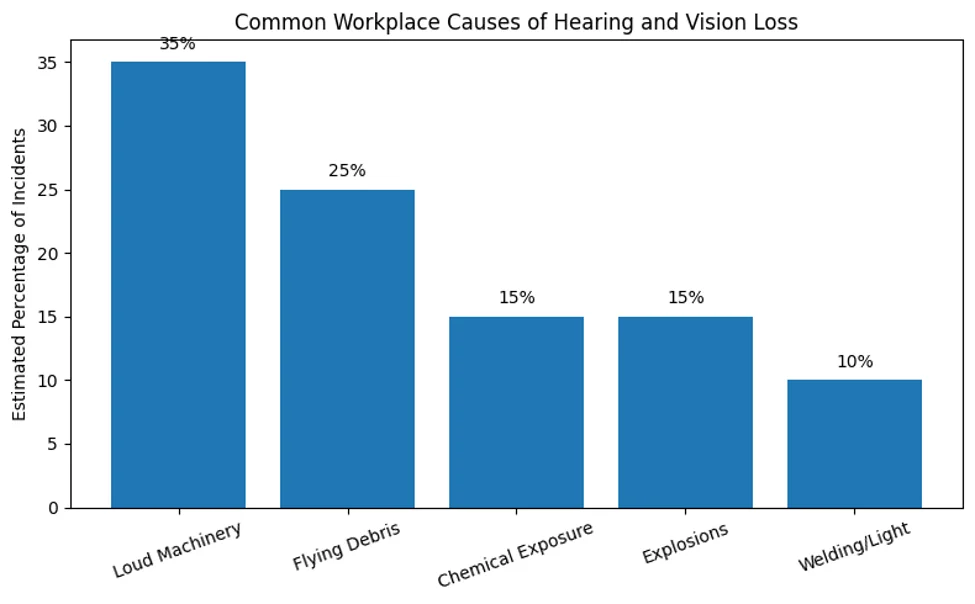
Common workplace causes of hearing and vision loss injuries based on occupational exposure trends. Loud machinery exposure and airborne debris remain the leading contributors to reported claims.
Sources: OSHA Occupational Noise Exposure Standards, CDC Workplace Eye Safety Data, Bureau of Labor Statistics
https://www.osha.gov/noise
https://www.cdc.gov/niosh/topics/eye/
https://www.bls.gov/iif/
These patterns are important because hearing and vision loss claims are often heavily disputed, especially when injuries develop gradually rather than from a single accident.
Types of Hearing and Vision Injuries Workers Experience
Hearing and vision injuries can range from temporary symptoms to permanent impairment.
Common hearing-related injuries include:
- Partial or total hearing loss
- Tinnitus or constant ringing in the ears
- Noise-induced hearing damage
- Eardrum injuries caused by explosions or pressure
Common vision-related injuries include:
- Eye trauma from debris or chemicals
- Partial or complete vision loss
- Corneal injuries or burns
- Long-term light exposure damage
Some workers experience symptoms gradually over time, while others suffer immediate impairment following an accident.
Because these injuries may worsen progressively, early medical evaluation is extremely important.
Workers’ Compensation Benefits for Hearing and Vision Loss
Most workers in Winston-Salem are covered under the North Carolina Workers’ Compensation Act if their employer has at least three employees.
Benefits may include:
- Medical treatment and specialist care
- Hearing aids or vision-related treatment
- Wage replacement during recovery
- Compensation for permanent impairment
In cases involving permanent hearing or vision loss, additional compensation may apply depending on the severity of the condition.
However, insurers frequently challenge these claims, especially when the injury developed over time.
To protect your claim, you should:
- Report the condition as soon as possible
- Seek medical evaluation immediately
- File Form 18 with the Industrial Commission
Delays in reporting can make it easier for insurers to argue that the condition is unrelated to work.
Steps to Take After a Hearing or Vision Injury
The steps you take after noticing symptoms can significantly affect your claim.
You should:
- Report the injury or symptoms to your employer
- Seek immediate medical evaluation
- Document workplace exposure conditions
- Keep records of symptoms, treatment, and missed work
If your injury developed gradually, documenting the type of work you performed and the conditions you were exposed to can help strengthen your case.
Medical testing is especially important in hearing and vision claims because objective evidence often plays a major role in determining benefits.
Challenges Workers Face in Hearing and Vision Claims
Hearing and vision loss claims are frequently disputed because they often involve long-term exposure rather than a single event.
Insurance companies may argue:
- The condition developed outside of work
- The injury is age-related
- Symptoms are not severe enough to qualify
- The worker failed to report the condition promptly
These cases often require strong medical documentation and expert evaluations to establish a connection between workplace exposure and the injury.
Workers in noisy or hazardous industries may also face challenges proving the extent of exposure over time.
Occupational Exposure and Long-Term Injury Claims
Some hearing and vision injuries develop after years of repeated workplace exposure. This is especially common in industries involving machinery, chemicals, welding, or industrial equipment.
Long-term exposure claims may involve:
- Chronic industrial noise exposure
- Repeated chemical contact
- Continuous exposure to airborne particles
- Long-term welding or light exposure
These cases can be more difficult because the symptoms often appear gradually. However, occupational exposure injuries may still qualify for workers’ compensation benefits under North Carolina law.
Call Now (336) 470-0177
Available 24/7 Free Case Review
How a Winston-Salem Hearing and Vision Loss Lawyer Can Help
Claims involving hearing or vision loss often require substantial documentation and medical evidence. Legal guidance can help ensure your case is properly supported.
An attorney can help by:
- Reviewing your workplace exposure history
- Gathering medical and occupational evidence
- Communicating with insurance companies
- Representing you during hearings or disputes
Bowman Law PLLC represents injured workers throughout Winston-Salem and focuses on workers’ compensation claims involving occupational injuries and denied benefits. Attorney Joe Bowman works with clients to strengthen claims and navigate the legal process.
The Role of the North Carolina Industrial Commission
Workers’ compensation claims involving hearing and vision loss are handled through the North Carolina Industrial Commission. This agency oversees filings, resolves disputes, and conducts hearings when necessary.
If your claim is denied or challenged, the Commission provides the structure for presenting medical evidence and pursuing benefits.
Understanding how the process works can help you move forward more effectively.
Important Deadlines to Know
Workers’ compensation claims involve strict timelines.
Important deadlines include:
- Reporting the injury or symptoms within 30 days
- Filing Form 18 within two years
- Meeting deadlines for appeals and hearings
For occupational exposure cases, determining when the injury officially began can sometimes be more complicated. Early reporting and medical evaluation can help avoid disputes.
Why Injured Workers Choose Bowman Law PLLC
Workers suffering from hearing or vision loss often face uncertainty about their future employment, medical needs, and financial stability.
Bowman Law PLLC works with injured workers throughout Winston-Salem and focuses on workplace injury claims involving occupational exposure, denied benefits, and serious injuries.
Clients receive:
- Clear communication throughout the process
- Guidance on documentation and medical evidence
- Representation during disputes and hearings
The firm focuses on helping injured workers understand their options and pursue available benefits under North Carolina law.
Take the Next Step
Hearing and vision loss injuries can affect nearly every part of your life and career. Taking action early can help protect your rights and improve your chances of recovering benefits.
If you suffered hearing or vision loss related to your job in Winston-Salem, you can contact Bowman Law PLLC to discuss your situation. Call (336) 470-0177 to learn about the options available.





