

Occupational illnesses and diseases can develop after long-term exposure to hazardous workplace conditions, chemicals, repetitive stress, poor air quality, industrial dust, loud noise, or toxic substances. Workers in Winston-Salem industries such as manufacturing, healthcare, construction, transportation, agriculture, and warehousing may face increased risks of developing serious work-related medical conditions over time.
North Carolina workers’ compensation laws may provide benefits for qualifying occupational diseases, including medical treatment, wage replacement, and disability compensation. These claims are often heavily disputed because symptoms may appear gradually, and insurers frequently challenge whether the illness is truly work-related.
Bowman Law PLLC helps injured workers throughout Winston-Salem and North Carolina pursue occupational disease claims, denied workers’ compensation benefits, and workplace injury cases. Attorney Joe Bowman focuses on helping workers understand their rights and navigate complex workers’ compensation issues involving long-term occupational exposure.
Occupational Diseases Are Often More Difficult Than Standard Injury Claims
Unlike sudden workplace accidents, occupational disease claims usually develop slowly over time. Many workers do not immediately realize their symptoms are connected to their jobs until the condition becomes serious enough to interfere with daily life or employment.
Workers in Winston-Salem may spend years exposed to:
- Industrial chemicals
- Dust and airborne contaminants
- Repetitive physical strain
- Toxic fumes
- Excessive workplace noise
- Biological hazards


Call Now (336) 470-0177
Available 24/7 Free Case Review
Over time, these exposures may contribute to chronic medical conditions that require ongoing treatment or permanently affect a worker’s ability to earn a living.
Because occupational illnesses often develop gradually, workers’ compensation insurers frequently dispute these claims more aggressively than standard accident cases.
Common Occupational Diseases in Winston-Salem Workplaces
Occupational diseases can affect workers across many industries throughout Forsyth County and the surrounding Winston-Salem area.
Common occupational illnesses include:
- Respiratory diseases caused by chemical or dust exposure
- Occupational asthma
- Hearing loss from long-term noise exposure
- Carpal tunnel syndrome and repetitive stress conditions
- Skin disorders caused by workplace chemicals
- Toxic exposure illnesses
Workers in manufacturing facilities, warehouses, healthcare systems, logistics operations, and industrial plants may face elevated risks due to ongoing exposure.
In Winston-Salem, industries involving production work, transportation, medical services, and construction often expose workers to environments where occupational illnesses may develop over time.
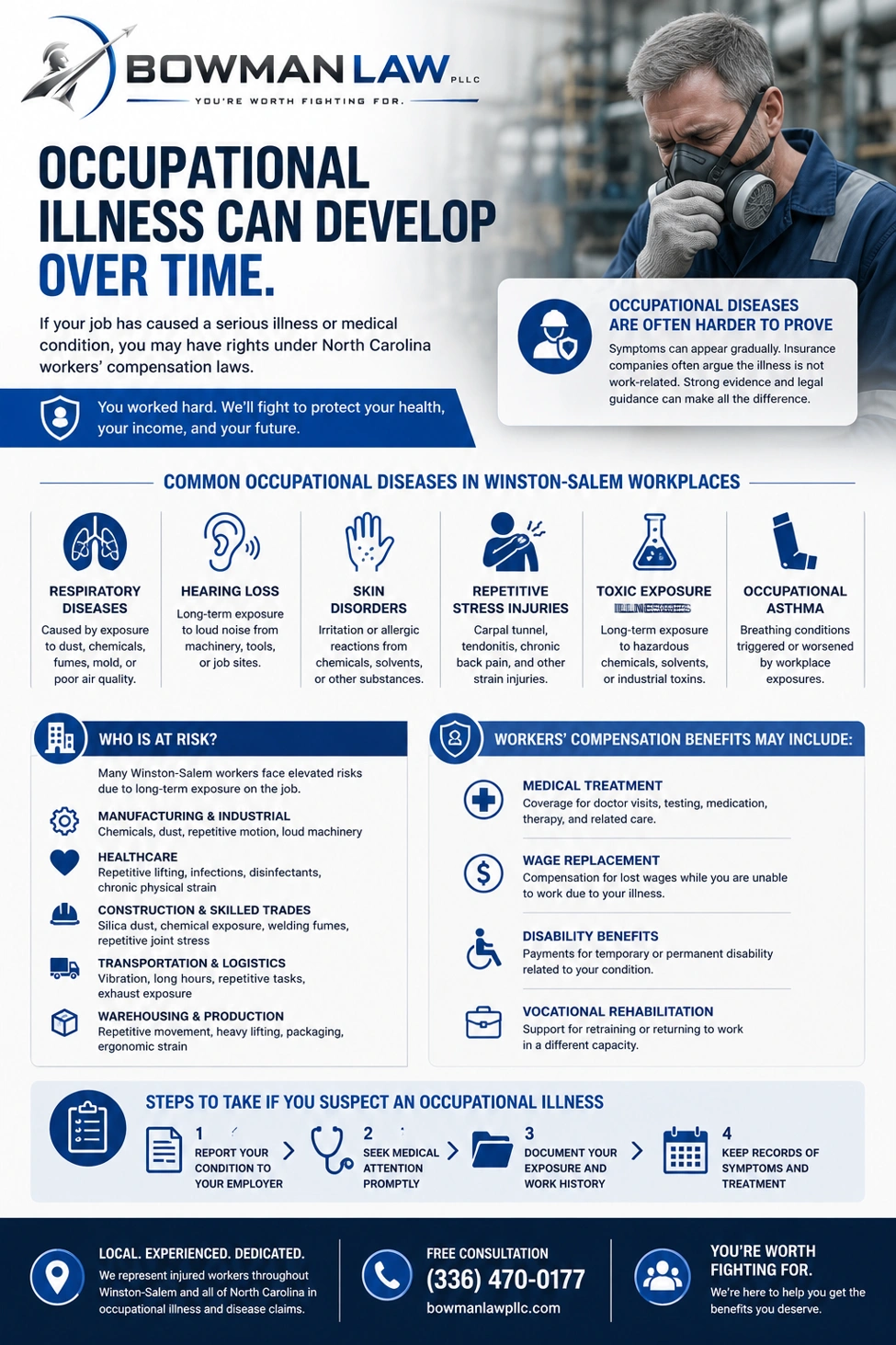
Industries in Winston-Salem With Elevated Occupational Disease Risks
Winston-Salem has a long history involving manufacturing, industrial operations, healthcare employment, logistics, and transportation-related work. Many of these industries expose employees to repetitive physical demands or potentially hazardous environments.
Higher-risk industries may include:
Manufacturing and Industrial Work
Workers in manufacturing plants may experience exposure to:
- Industrial dust
- Chemical fumes
- Repetitive motion strain
- Loud machinery noise
Long-term exposure may contribute to respiratory conditions, hearing loss, and repetitive stress injuries.
Healthcare Employment
Healthcare workers throughout Winston-Salem hospitals and medical facilities often face:
- Repetitive lifting injuries
- Infectious disease exposure
- Chemical disinfectant exposure
- Chronic musculoskeletal strain
Nurses, aides, technicians, and hospital support staff frequently perform physically demanding work that may eventually lead to occupational illnesses.
Construction and Skilled Trades
Construction workers may encounter:
- Silica dust exposure
- Chemical solvents
- Welding fumes
- Repetitive joint stress
Long-term exposure to these conditions may contribute to chronic respiratory disease or occupational injuries.
What Makes Occupational Disease Claims Difficult?
Occupational illness claims are often more challenging than standard workplace accident cases because there is usually no single traumatic event tied to the condition.
Insurance companies frequently argue:
- The illness developed outside of work
- The condition is age-related
- The symptoms are caused by hobbies or personal activities
- The disease existed before employment
In many cases, workers must prove that workplace exposure significantly contributed to the condition.
Medical evidence, work history documentation, and occupational exposure records often become critical in these cases.
Repetitive Stress Conditions as Occupational Diseases
Not all occupational disease claims involve chemical or toxic substance exposure.
North Carolina workers may also develop occupational conditions involving repetitive stress and physical wear on the body.
Common repetitive stress conditions include:
- Carpal tunnel syndrome
- Tendonitis
- Chronic back injuries
- Shoulder injuries
- Nerve compression disorders
Workers in warehouses, production facilities, retail jobs, and office settings may all develop repetitive motion injuries over time.
These cases are frequently disputed because symptoms often develop gradually.
Toxic Exposure and Long-Term Illnesses
Some occupational diseases result from repeated exposure to hazardous substances in the workplace.
Examples may include exposure to:
- Industrial cleaning chemicals
- Paints and solvents
- Airborne contaminants
- Asbestos or silica dust
- Toxic fumes
Symptoms may not appear immediately after exposure. In some cases, workers may not receive a diagnosis until years later.
Long-term toxic exposure claims often involve extensive medical review and documentation.
Workers’ Compensation Benefits for Occupational Diseases
North Carolina workers’ compensation laws may provide benefits for qualifying occupational diseases and illnesses.
Potential benefits may include:
- Medical treatment
- Prescription medication coverage
- Wage replacement benefits
- Permanent disability compensation
- Vocational rehabilitation services
However, workers’ compensation insurers often challenge occupational disease claims more aggressively because of the long-term nature of the conditions.
Proper reporting and medical documentation become especially important in these cases.
Steps Workers Should Take After a Diagnosis
Workers who believe they have developed an occupational illness should take action as soon as possible.
Important steps may include:
- Reporting the condition to the employer
- Seeking medical evaluation immediately
- Documenting workplace exposure history
- Keeping records of symptoms and treatment
Workers should also clearly explain their workplace duties and exposure conditions to treating physicians.
Medical records connecting the illness to occupational exposure may become extremely important later in the claim process.
Why Timing Matters in Occupational Disease Claims
Occupational illnesses often involve complicated timelines because symptoms may develop slowly over years.
This creates disputes regarding:
- When the condition officially began
- Whether exposure occurred during employment
- Whether filing deadlines apply
Waiting too long to seek medical evaluation or report symptoms may make the claim more difficult.
Early documentation often strengthens the connection between the illness and workplace exposure.
How a Winston-Salem Occupational Disease Lawyer Can Help
Occupational disease claims often require extensive evidence, medical documentation, and legal analysis.
An attorney can help by:
- Reviewing work history and exposure records
- Gathering medical documentation
- Addressing insurance company disputes
- Representing workers before the North Carolina Industrial Commission
Bowman Law PLLC works with injured workers throughout Winston-Salem and focuses on workers’ compensation claims involving occupational illnesses, toxic exposure claims, repetitive stress injuries, and denied benefits.
Call Now (336) 470-0177
Available 24/7 Free Case Review
Attorney Joe Bowman helps clients understand how North Carolina workers’ compensation laws apply to long-term occupational conditions.
Why Injured Workers in Winston-Salem Turn to Bowman Law PLLC
Workers facing occupational illness claims are often dealing with chronic symptoms, uncertainty regarding future employment, and pressure from insurance companies questioning their diagnosis.
Bowman Law PLLC helps workers throughout Winston-Salem navigate complex occupational disease claims involving:
- Long-term workplace exposure
- Toxic substance exposure
- Repetitive stress injuries
- Denied workers’ compensation benefits
Clients receive:
- Clear communication throughout the process
- Guidance regarding medical documentation
- Representation during disputes and hearings
The firm focuses on helping workers understand their rights and pursue available compensation under North Carolina law.
Take the Next Step
Occupational diseases can affect your health, ability to work, and long-term financial stability. Because these claims are often heavily disputed, early action and proper documentation can make a major difference.
If you developed a work-related illness or occupational disease in Winston-Salem or elsewhere in North Carolina, Bowman Law PLLC can help you understand your options. Calling (336) 470-0177 can help you learn about the legal rights and workers’ compensation benefits that may be available.





