

AI Summary
Welding accidents can cause severe burns, eye injuries, respiratory illnesses, electrical injuries, and long-term occupational health conditions for workers throughout Winston-Salem and North Carolina. Welders working in manufacturing plants, industrial facilities, construction sites, transportation operations, and fabrication shops often face dangerous conditions involving extreme heat, heavy equipment, toxic fumes, and elevated work environments. Injured workers may qualify for workers’ compensation benefits under North Carolina law, including medical treatment, wage replacement, and disability compensation. Some welding accidents may also involve third-party liability claims arising from defective equipment or unsafe job-site conditions.
Bowman Law PLLC helps injured workers throughout Winston-Salem navigate workers’ compensation claims involving welding accidents, industrial injuries, toxic exposure conditions, and denied benefits. Attorney Joe Bowman focuses on helping injured workers understand their rights after serious workplace accidents.
Welding Is One of the Most Dangerous Skilled Trades
Welding is physically demanding and often performed in hazardous environments involving high temperatures, electrical systems, confined spaces, and combustible materials.
Workers throughout Winston-Salem may perform welding duties in:
- Manufacturing facilities
- Industrial plants
- Construction projects
- Transportation and logistics operations
- Commercial fabrication shops
- Mechanical repair facilities
Even experienced welders face risks every day while working around sparks, pressurized equipment, metal fumes, and elevated work areas.


Call Now (336) 470-0177
Available 24/7 Free Case Review
When safety procedures fail or equipment malfunctions, injuries can be catastrophic.
Winston-Salem’s Industrial and Manufacturing Economy Increases Welding Risks
Winston-Salem has a long history involving manufacturing, industrial production, transportation operations, and commercial construction.
Many workers throughout Forsyth County are employed in industries where welding is regularly performed, including:
- Heavy manufacturing
- Steel fabrication
- Warehouse operations
- Industrial maintenance
- Equipment repair
- Commercial construction
These workplaces may expose welders to dangerous conditions, including confined spaces, poor ventilation, electrical hazards, and repeated exposure to toxic fumes.
As industrial development and infrastructure projects continue growing throughout Winston-Salem, welding-related injury risks remain significant for many workers.
Common Causes of Welding Accidents
Welding injuries can occur suddenly during a single accident or develop gradually over time due to repeated exposure to hazardous conditions.
Common welding accident causes include:
- Flash burns and arc eye injuries
- Fires and explosions
- Electrical accidents
- Inadequate ventilation
- Falling objects or elevated work accidents
- Defective welding equipment
Some accidents occur because proper protective equipment was unavailable or because employers failed to follow workplace safety procedures.
Welding environments often involve multiple hazards operating simultaneously, increasing the risk of serious injury.
Welding Injuries and Workplace Exposure Risks
Welding accidents can involve both traumatic injuries and long-term occupational health conditions.
Welding accidents can cause devastating injuries involving burns, electrical shocks, toxic fume exposure, and long-term occupational illnesses. The infographic below highlights common welding hazards affecting workers throughout Winston-Salem’s industrial and construction environments.
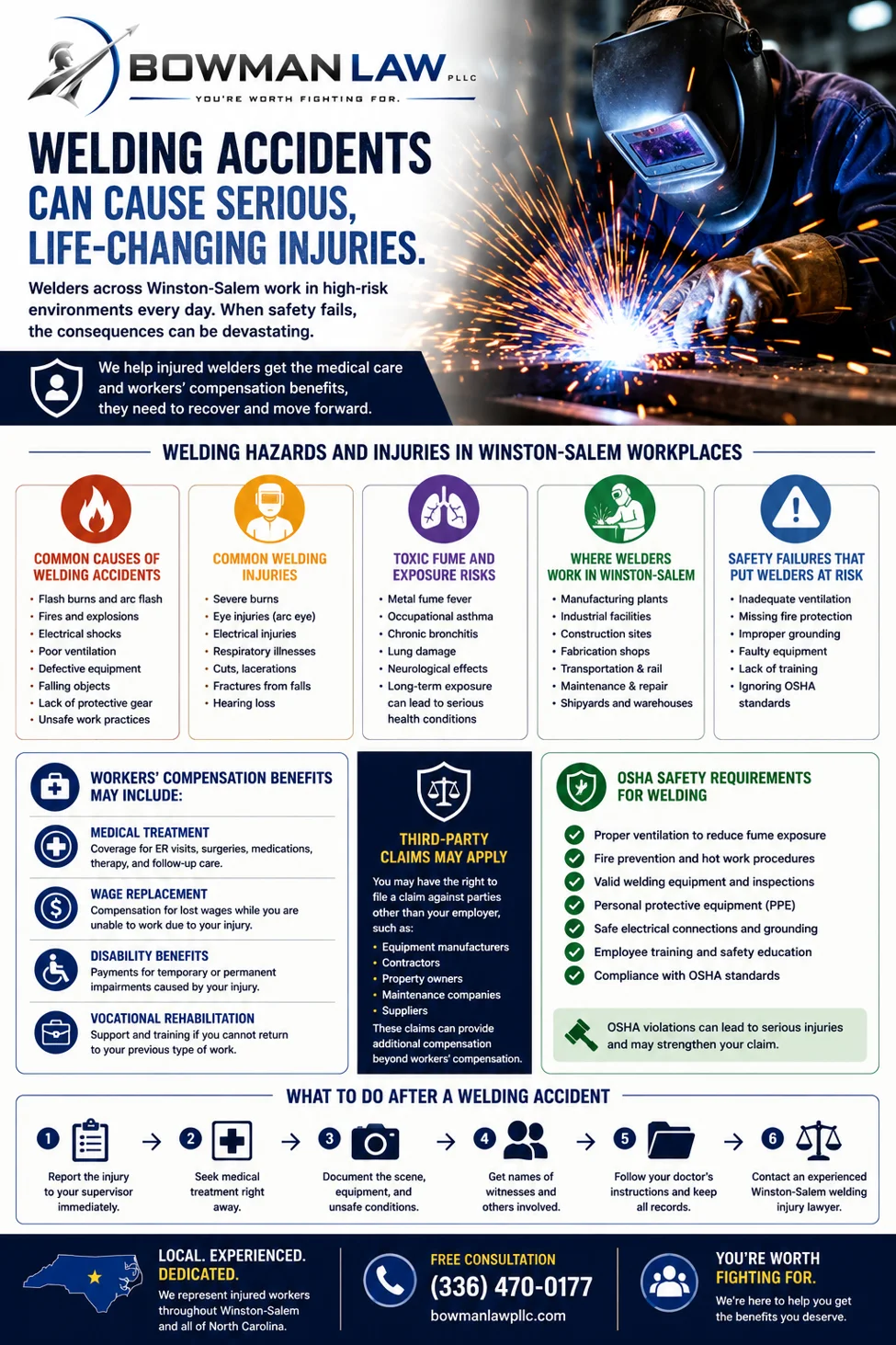
Welders in Winston-Salem may face serious workplace hazards, including heat exposure, electrical systems, confined spaces, and hazardous industrial fumes.
These workplace hazards are important because welding injuries often require extensive medical treatment, result in permanent impairments, and lead to disputed workers’ compensation claims.
Burn Injuries Are Common in Welding Accidents
Burn injuries are among the most serious risks welders face on industrial and construction job sites.
Common burn injuries may include:
- Thermal burns from sparks or molten metal
- Flash burns from welding arcs
- Chemical burns
- Electrical burns
Severe burns may require:
- Skin graft procedures
- Long-term rehabilitation
- Pain management treatment
- Reconstructive surgeries
Some workers may suffer permanent scarring or physical limitations after serious welding accidents.
Respiratory Illnesses and Toxic Fume Exposure
Many welding environments involve dangerous airborne contaminants and toxic fumes.
Repeated exposure may contribute to:
- Occupational asthma
- Chronic respiratory disease
- Metal fume fever
- Lung damage
- Neurological symptoms
Workers performing welding in confined or poorly ventilated areas may face even greater health risks.
These occupational illnesses sometimes develop gradually, making workers’ compensation claims more complicated.
Eye Injuries and Vision Damage
Welding arcs produce extremely intense light and radiation exposure.
Without proper eye protection, welders may suffer:
- Arc eye injuries
- Retinal damage
- Vision loss
- Eye burns
Even short-term exposure to welding arcs can cause painful and serious eye injuries.
Workers often require emergency medical treatment after flash burn incidents.
Workers’ Compensation Benefits for Welding Injuries
North Carolina workers’ compensation laws may provide benefits for welders injured while performing job duties.
Potential benefits may include:
- Medical treatment coverage
- Wage replacement benefits
- Disability compensation
- Vocational rehabilitation services
Workers should report injuries immediately and seek medical care as soon as possible after an accident.
Delays in treatment or reporting may create disputes regarding the severity or cause of the injury.
Third-Party Liability in Welding Accidents
Some welding accidents involve third-party liability issues in addition to workers’ compensation claims.
Potential third parties may include:
- Equipment manufacturers
- Contractors or subcontractors
- Property owners
- Maintenance companies
Examples may involve:
- Defective welding equipment
- Unsafe industrial worksites
- Improperly maintained machinery
- Explosion hazards caused by other contractors
These cases can become legally complex because multiple companies often operate within the same industrial environment.
OSHA Violations and Welding Safety
OSHA maintains strict workplace safety regulations involving welding operations.
Common safety violations may include:
- Inadequate ventilation systems
- Missing protective equipment
- Improper electrical grounding
- Fire safety failures
- Lack of employee safety training
Safety violations often become important evidence after serious industrial accidents.
Unsafe conditions may expose workers to preventable injuries and long-term health problems.
What Injured Welders Should Do After an Accident
The steps taken immediately after a welding injury can affect both medical recovery and workers’ compensation claims.
Workers should:
- Report the accident immediately
- Seek emergency medical treatment if necessary
- Document unsafe conditions when possible
- Preserve information regarding the equipment involved
Workers experiencing respiratory symptoms or toxic exposure should also clearly explain their workplace conditions to treating physicians.
Medical records linking the condition to welding exposure may become extremely important later.
How a Winston-Salem Welding Injury Lawyer Can Help
Welding accident claims often involve serious injuries, occupational illness issues, and complicated workers’ compensation disputes.
An attorney can help by:
- Reviewing workplace safety conditions
- Gathering medical documentation
- Investigating equipment failures
- Addressing denied benefit disputes
Bowman Law PLLC works with injured workers throughout Winston-Salem and focuses on workers’ compensation claims involving industrial accidents, burn injuries, toxic exposure claims, and serious workplace injuries.
Attorney Joe Bowman helps workers understand their legal rights after welding-related accidents and occupational illnesses.
Why Injured Workers Turn to Bowman Law PLLC
Industrial injury claims often involve major physical, financial, and emotional challenges for injured workers and their families.
Call Now (336) 470-0177
Available 24/7 Free Case Review
Bowman Law PLLC helps injured workers throughout Winston-Salem pursue workers’ compensation claims involving:
- Welding accidents
- Burn injuries
- Toxic fume exposure
- Occupational illnesses
- Denied workers’ compensation benefits
Clients receive:
- Clear communication throughout the claims process
- Guidance regarding medical documentation and benefits
- Representation during disputes and hearings
The firm focuses on helping injured workers protect their rights under North Carolina workers’ compensation laws.
Take the Next Step
Welding injuries can lead to long-term medical problems, permanent disability, and financial uncertainty. Understanding your legal rights early can help protect your future and your ability to recover benefits.
If you were injured in a welding accident in Winston-Salem or elsewhere in North Carolina, Bowman Law PLLC can help you better understand your options. Calling (336) 470-0177 can help you learn about the workers’ compensation benefits and legal protections that may be available.





