


Workers’ compensation settlements in North Carolina are typically discussed after an injured worker reaches maximum medical improvement (MMI) or when disputes arise regarding benefits, disability, or future medical treatment. There is no fixed timeline for when a settlement offer must be made. Insurance companies often evaluate factors such as medical costs, work restrictions, future treatment needs, and the strength of the claim before negotiating.
Some claims settle within months, while others take significantly longer, depending on the severity of the injury and whether disputes exist. Before accepting any settlement, injured workers should understand how the agreement may affect future medical care and compensation rights.
Bowman Law PLLC helps injured workers throughout Winston-Salem and North Carolina evaluate workers’ compensation claims, settlement offers, denied benefits, and long-term injury issues. Attorney Joe Bowman focuses on helping workers understand their rights and avoid costly mistakes during the settlement process.
Understanding Workers’ Compensation Settlements in North Carolina
Many injured workers assume a settlement offer automatically arrives after a workplace accident. In reality, workers’ compensation settlements in North Carolina do not follow a standard timeline.
Some cases settle relatively quickly, while others remain open for extended periods because medical treatment is ongoing or disputes over disability benefits persist. Insurance companies often wait until they have a clearer understanding of the worker’s long-term medical condition before seriously discussing a settlement.
A settlement is generally an agreement between the injured worker and the insurance company that resolves part or all of the workers’ compensation claim. In many cases, this includes compensation for future benefits in exchange for the case being closed.
Because settlements may permanently affect important rights, understanding when and why they are offered is critical.
When Settlement Discussions Usually Begin
Settlement discussions often begin after a worker reaches maximum medical improvement (MMI).
Maximum medical improvement does not necessarily mean a worker has fully recovered. Instead, it generally means doctors believe the condition has stabilized and additional treatment is unlikely to create substantial improvement.
At this stage, insurance companies may begin evaluating:
- Permanent work restrictions
- Future medical treatment needs
- Disability ratings
- Ongoing wage loss exposure
- Potential litigation risks
Once these factors become clearer, insurers often feel more comfortable discussing settlement.
However, settlement negotiations can begin earlier in certain cases, especially when disputes arise regarding compensability, disability status, or return-to-work issues.
Workers’ Compensation Settlement Trends
Workers’ compensation settlement timelines vary significantly depending on injury severity, medical treatment, and disputes involving disability or future care.
Workers’ compensation settlements are influenced by several factors involving medical treatment, disability status, and future financial exposure. Understanding these issues helps explain why some cases settle quickly while others take much longer.
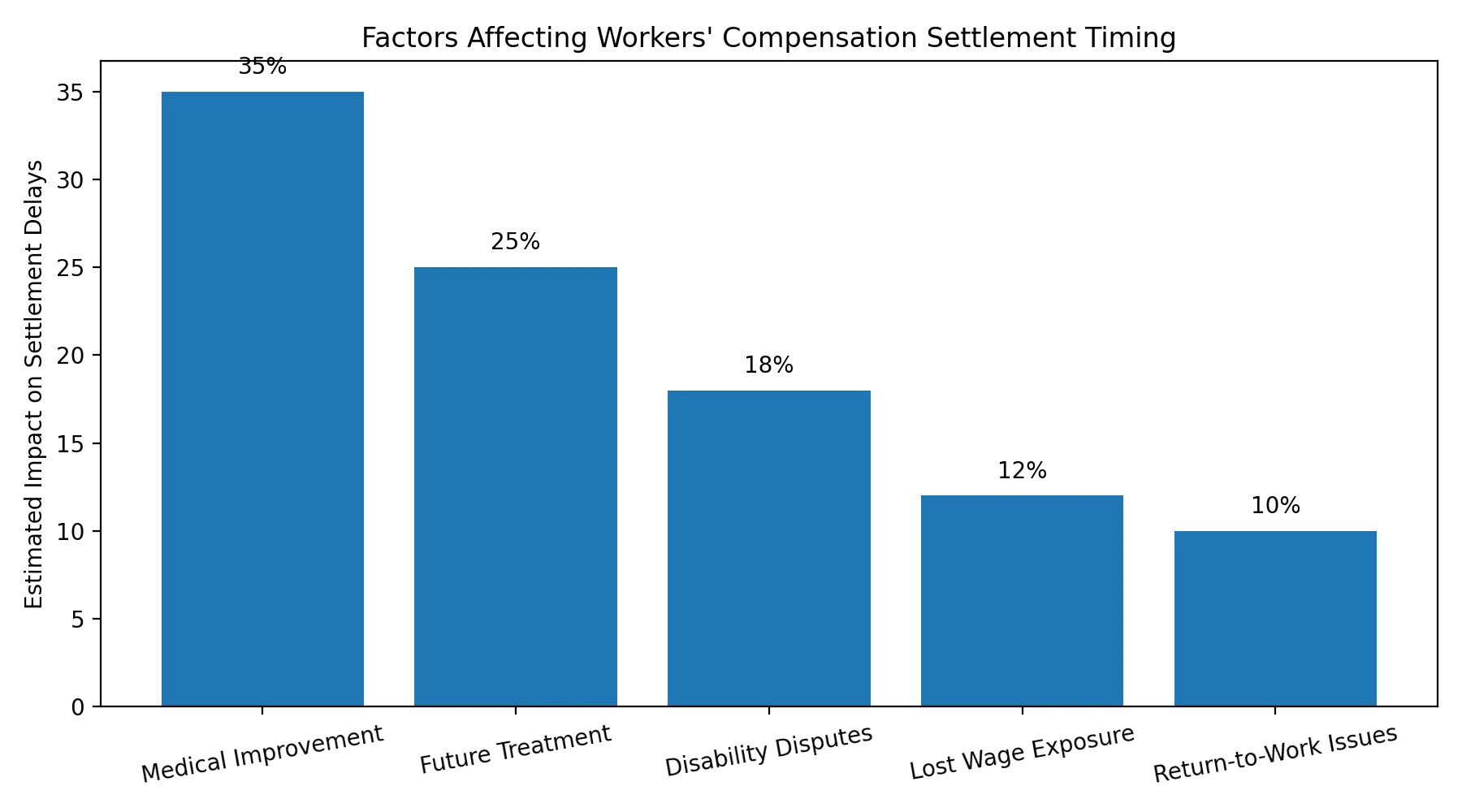
Common factors influencing workers’ compensation settlement timing in North Carolina. Medical improvement and future treatment needs often play major roles in negotiations.
(Sources: North Carolina Industrial Commission, North Carolina Workers’ Compensation Act)
Settlement timing matters because accepting an agreement too early may affect future medical benefits and compensation rights.
Factors That Affect Settlement Timing
Several factors can influence when a workers’ compensation settlement offer is made.
Severity of the Injury
More serious injuries often take longer to settle because doctors need time to evaluate long-term effects, work restrictions, and future medical needs.
Cases involving spinal injuries, traumatic brain injuries, or surgeries may remain open significantly longer than minor injury claims.
Ongoing Medical Treatment
Insurance companies rarely want to settle before understanding how much treatment may still be necessary.
If surgeries, rehabilitation, injections, or additional evaluations are still pending, settlement discussions may be delayed.
Return-to-Work Status
Whether the worker can return to employment often affects settlement negotiations.
Cases involving permanent restrictions or an inability to return to previous work may entail greater financial exposure for insurers, which can affect timing and negotiations.
Disputes Regarding Benefits
Settlement discussions sometimes begin earlier when disputes arise over:
- Whether the injury is work-related
- Disability payments
- Medical treatment approval
- Permanent impairment ratings
In disputed claims, settlement may become a way to avoid extended litigation before the North Carolina Industrial Commission.
What Is Included in a Workers’ Compensation Settlement?
Settlement agreements may involve several types of compensation depending on the circumstances of the case.
Potential settlement components include:
- Future wage loss benefits
- Permanent disability compensation
- Future medical expenses
- Resolution of disputed claims
In North Carolina, many settlements are completed through a Clincher Agreement. This agreement typically closes the workers’ compensation claim entirely in exchange for a negotiated payment.
Once approved, reopening the case later is often extremely difficult.
Because of this, understanding future medical and financial needs before settling is important.
Why Insurance Companies Offer Settlements
Insurance companies often pursue settlements to reduce long-term financial uncertainty.
From the insurer’s perspective, settling a claim may:
- Limit future medical exposure
- Avoid ongoing disability payments
- Reduce litigation costs
- Close the file permanently
However, the timing of an offer may also reflect the insurer’s evaluation of the claim’s strength or risk.
Some insurers attempt to settle cases early before workers fully understand the long-term impact of their injuries.
Others delay negotiations while investigating medical records or disability issues.
Risks of Settling Too Early
One of the biggest mistakes injured workers make is accepting a settlement before understanding the full extent of their injuries.
Early settlements may fail to account for:
- Future surgeries
- Ongoing treatment needs
- Permanent work limitations
- Long-term wage loss
Once a settlement closes the claim, future medical costs may become the worker’s responsibility.
This is especially important in serious injury cases involving chronic pain, spinal damage, or permanent restrictions.
Before accepting any settlement, workers should fully understand how the agreement may affect future benefits.
Can You Reject a Settlement Offer?
Yes. Injured workers are not required to accept an initial settlement offer from the insurance company.
In many cases, settlement negotiations involve multiple rounds of discussion before an agreement is reached.
Workers may reject offers they believe are:
- Too low
- Incomplete
- Premature
- Unfair based on future medical needs
Settlement value depends heavily on medical evidence, disability status, and future treatment projections.
What Happens After a Settlement Is Reached?
Workers’ compensation settlements in North Carolina typically require approval through the North Carolina Industrial Commission.
The Commission reviews settlement agreements to ensure they comply with state law and adequately resolve the claim.
Once approved:
- The agreement generally becomes final
- Future claims may be barred
- Payments are processed according to the agreement terms
Because settlement agreements often involve permanent legal consequences, careful review before signing is important.
How a Winston-Salem Workers’ Compensation Lawyer Can Help
Settlement negotiations can become complicated, especially in serious injury cases involving permanent disability or future medical treatment.
An attorney can help by:
- Reviewing settlement offers
- Evaluating future medical and wage loss issues
- Negotiating with insurance companies
- Protecting long-term financial interests
Bowman Law PLLC represents injured workers throughout Winston-Salem and focuses on workers’ compensation claims involving denied benefits, serious injuries, and settlement disputes.
Attorney Joe Bowman helps clients evaluate settlement offers carefully and understand how agreements may affect future rights.
Why Injured Workers Turn to Bowman Law PLLC
Workers facing settlement decisions often feel pressure from insurance companies while still dealing with medical treatment and financial stress.
Bowman Law PLLC works with injured workers throughout Winston-Salem and focuses on helping clients navigate workers’ compensation claims and settlement negotiations.
Clients receive:
- Clear communication throughout the process
- Guidance regarding medical and financial considerations
- Representation during disputes and negotiations
The firm focuses on helping injured workers make informed decisions regarding their claims and future benefits.
Take the Next Step
Workers’ compensation settlements can have long-term financial and medical consequences. Understanding when settlement offers are made—and whether the offer is fair—can make a significant difference in your future.
If you have questions about a workers’ compensation settlement offer in Winston-Salem or elsewhere in North Carolina, Bowman Law PLLC can help you evaluate your options. Calling (336) 470-0177 can help you better understand your rights and next steps.
Frequently Asked Questions
When do workers’ compensation settlement talks usually begin?
Settlement discussions often begin after the worker reaches maximum medical improvement or when disputes arise regarding benefits.
Do all workers’ compensation cases settle?
No. Some claims continue through hearings or ongoing benefit payments instead of settlement agreements.
Can I negotiate a workers’ compensation settlement offer?
Yes. Initial offers are often negotiable, depending on the medical evidence and the injury’s long-term impact.
What is a Clincher Agreement in North Carolina?
A Clincher Agreement is a settlement that generally closes the workers’ compensation claim in exchange for compensation.
Should I accept the first settlement offer?
Not necessarily. Accepting a settlement too early may affect future medical treatment and compensation rights.