

Most workplace injuries are eligible for workers’ compensation benefits in North Carolina if the injury occurred while you were performing job-related duties and arose out of your employment. Eligible injuries may include sudden accidents, repetitive stress injuries, occupational diseases, traumatic injuries, and aggravations of pre-existing conditions in certain circumstances.
However, simply getting hurt at work does not automatically guarantee benefits. Insurance companies often dispute whether an injury is work-related, whether it occurred during the course of employment, or whether medical treatment is necessary. Understanding the eligibility requirements can help injured workers protect their rights and avoid costly mistakes after a workplace accident.
Understanding Workers’ Compensation Eligibility
Many injured workers assume that any injury that happens at work automatically qualifies for workers’ compensation benefits.
Unfortunately, the law is more complicated than that.
In North Carolina, workers’ compensation claims generally must satisfy certain legal requirements before benefits become available.
The two primary questions are:
- Did the injury arise out of the employment?
- Did the injury occur in the course of employment?
While these concepts may sound similar, they are often the focus of disputes between injured workers and insurance companies.
The Injury Must Be Related to Your Job
One of the most important eligibility requirements is proving that the injury is connected to your employment.
Examples may include:
- Falling from a ladder on a construction site
- Injuring your back while lifting heavy inventory
- Being struck by equipment in a warehouse
- Suffering injuries in a work-related vehicle accident
- Developing an occupational illness from workplace exposure
The closer the connection between the injury and your job duties, the stronger the claim generally becomes.
Common Workplace Injuries That May Qualify
Workers’ compensation covers far more than dramatic accidents.
Eligible injuries often include:
Traumatic Injuries
These injuries result from a specific accident or event.
Examples include:
- Broken bones
- Head injuries
- Neck injuries
- Back injuries
- Shoulder injuries
- Knee injuries
Repetitive Stress Injuries
Some injuries develop gradually over time rather than from a single accident.
Examples include:
- Carpal tunnel syndrome
- Tendonitis
- Repetitive motion injuries
Occupational Diseases
Certain illnesses may qualify if they are connected to workplace conditions.
Examples include:
- Hearing loss
- Respiratory illnesses
- Occupational asthma
- Toxic exposure conditions
Aggravation of Existing Conditions
A pre-existing condition does not automatically prevent a workers’ compensation claim.
If work activities substantially worsen an existing condition, benefits may still be available in some circumstances.
Eligibility Checklist for North Carolina Workers
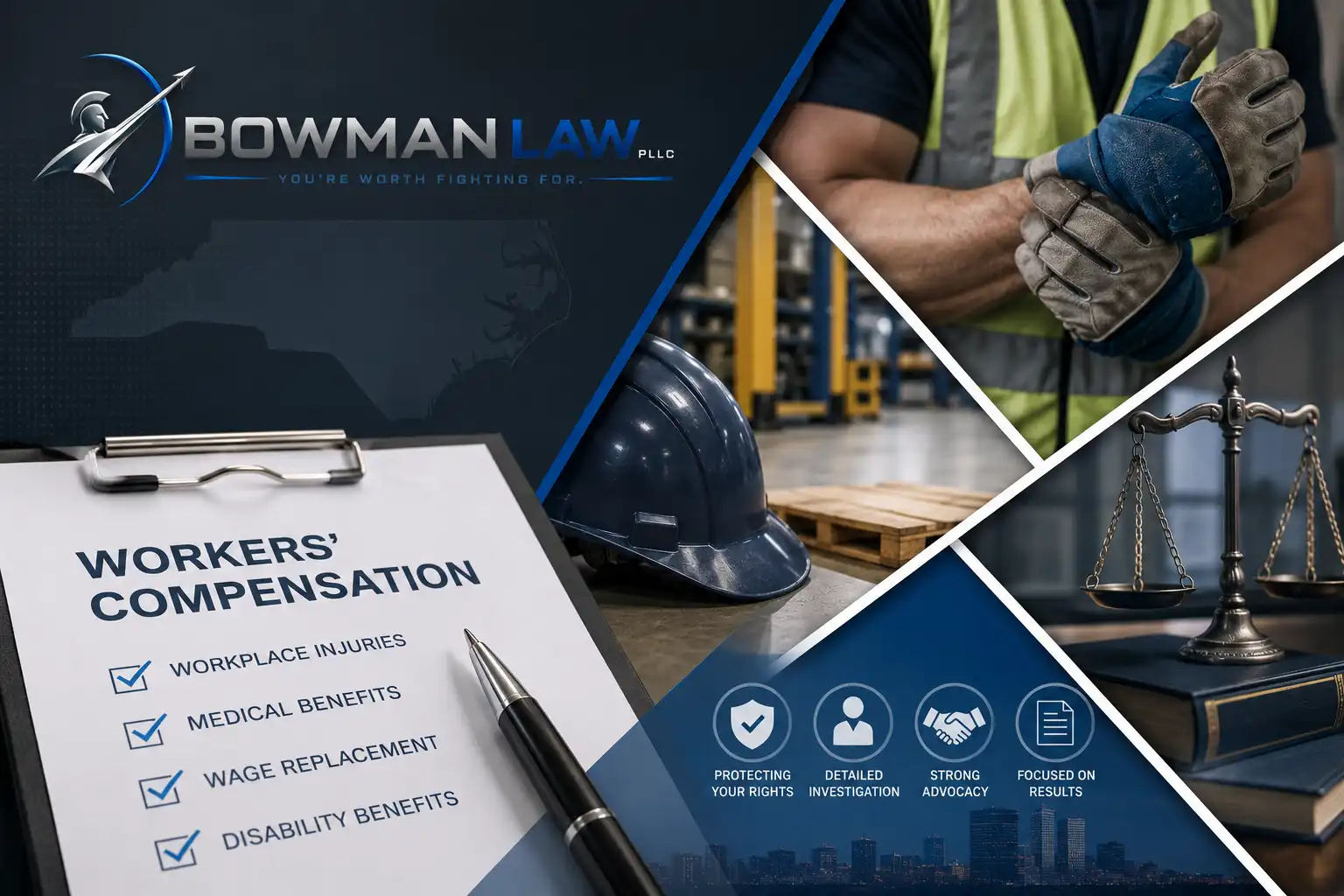
Many injured workers are unsure whether their injury qualifies for workers’ compensation benefits. The infographic below provides a simple overview of common eligibility factors that insurance companies and the North Carolina Industrial Commission often evaluate when reviewing workplace injury claims.

Not Every Workplace Injury Is Automatically Covered
Some situations create eligibility questions.
Examples may include:
- Horseplay incidents
- Intoxication-related accidents
- Off-duty injuries
- Personal errands unrelated to work
- Independent contractor classifications
Insurance companies often investigate these situations carefully before approving benefits.
Because every case is different, eligibility frequently depends on the specific facts involved.
What About Remote Workers?
Remote and hybrid work arrangements have created new questions regarding workers’ compensation eligibility.
In some situations, remote workers may still qualify for benefits if the injury occurred while performing job-related duties.
Examples may include:
- Injuries during work-related video conferences
- Injuries while handling employer equipment
- Accidents occurring during assigned job tasks
However, proving the connection to employment may be more difficult in remote work settings.
Why Insurance Companies Deny Eligible Claims
Even legitimate workplace injuries are sometimes denied.
Common reasons include:
- Alleged reporting delays
- Lack of medical evidence
- Disputes about how the injury occurred
- Questions regarding causation
- Independent contractor classifications
A denial does not necessarily mean the claim lacks merit.
Many disputes involve the interpretation of medical records, witness statements, or legal eligibility standards.
What Benefits May Be Available?
Eligible workers may qualify for:
- Medical treatment
- Prescription medication coverage
- Wage replacement benefits
- Permanent disability compensation
- Vocational rehabilitation services
The specific benefits available depend on the nature and severity of the injury.
Why Early Action Matters
Many workers unintentionally damage their claims by waiting too long to report injuries or seek treatment.
Early action can help:
- Preserve evidence
- Document symptoms
- Establish a connection to work activities
- Protect eligibility for benefits
Prompt reporting often reduces opportunities for insurance companies to dispute the claim.
Why Injured Workers Trust Bowman Law PLLC
Workers’ compensation claims affect more than just medical treatment.
They can affect:
- Income
- Employment
- Family finances
- Future career opportunities
Bowman Law PLLC focuses on helping injured workers throughout Winston-Salem and North Carolina navigate workplace injury claims and benefit disputes.
Attorney Joe Bowman is a Board Certified Workers’ Compensation Specialist certified by the North Carolina State Bar and focuses his practice on helping injured workers pursue the benefits they deserve.
Clients benefit from:
- Direct communication
- Personalized guidance
- Extensive workers’ compensation experience
- Representation focused on injured workers
Take the Next Step
If you have been injured at work, understanding whether your injury qualifies for workers’ compensation benefits is one of the most important first steps you can take.
Bowman Law PLLC helps injured workers throughout Winston-Salem and North Carolina understand their rights and navigate the workers’ compensation system.
Call (336) 470-0177 for a free consultation.
Frequently Asked Questions
Does every workplace injury qualify for workers’ compensation?
No. The injury generally must arise out of and occur in the course of employment.
Can repetitive stress injuries qualify?
Yes. Certain repetitive stress injuries may qualify under North Carolina workers’ compensation laws.
Can I receive benefits if I had a pre-existing condition?
Possibly. If work activities significantly aggravated the condition, benefits may still be available.
What if my claim was denied?
A denial does not necessarily mean you are ineligible. Many denied claims involve disputes that can be challenged.
How soon should I report a workplace injury?
You should report the injury as soon as possible and seek medical treatment promptly.