

- posted on
- by Paul
- in Uncategorized
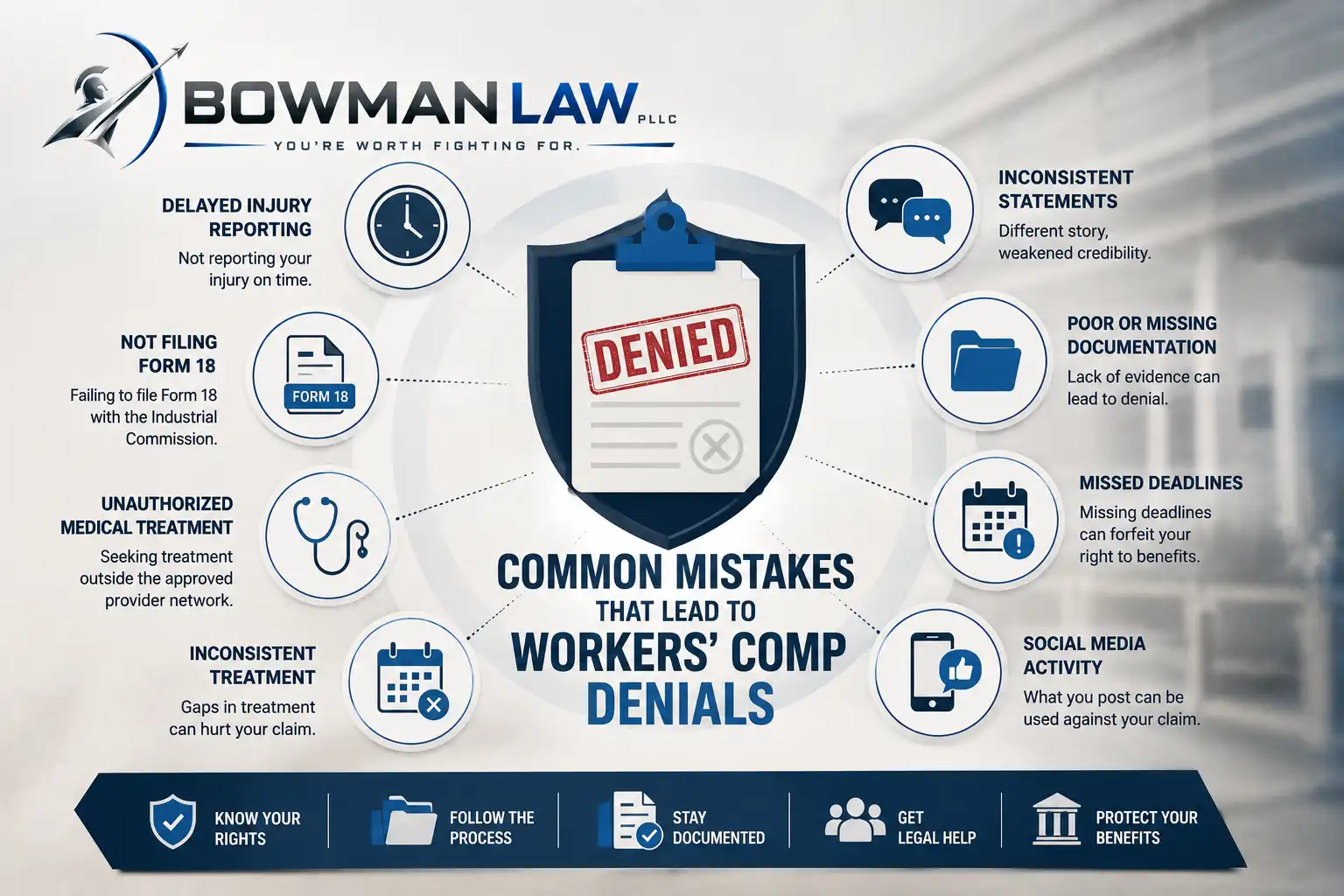
Workers’ compensation claims in North Carolina are frequently denied due to preventable mistakes such as delayed injury reporting, failure to file Form 18, inconsistent medical treatment, or disputes about whether the injury is work-related. Even valid claims can be denied if documentation is incomplete or deadlines are missed. Understanding these common errors helps injured workers protect their rights and improve their chances of receiving benefits under the North Carolina Workers’ Compensation Act. Legal guidance can help correct mistakes and strengthen claims that were denied.
Understanding Workers’ Comp Denials
Filing a workers’ compensation claim in North Carolina involves more than reporting an injury. The process is governed by specific rules, deadlines, and documentation requirements that must be followed carefully. When something is missed or handled incorrectly, it can give the insurance company a reason to delay or deny benefits.
Many injured workers are surprised to learn that denials are often tied to avoidable issues rather than the validity of the injury itself. Understanding these common mistakes can help you protect your claim and avoid unnecessary complications. Bowman Law PLLC represents injured workers throughout North Carolina and regularly assists clients whose claims were denied due to correctable errors. Identifying these issues early can make a meaningful difference in the outcome of your case.
Failing to Report the Injury Promptly
One of the most common reasons for denial is failing to report the injury on time. North Carolina law generally requires notice within 30 days, but waiting even a short period can raise questions about when and how the injury occurred. Insurance companies may argue:
- The injury did not happen at work
- The delay suggests another cause
- The injury is not as serious as claimed
Reporting your injury immediately and in writing creates a clear record and reduces the likelihood of disputes. Early reporting strengthens credibility and ensures your employer cannot later claim they were unaware of the incident. If your injury was reported late and your claim was denied, it may still be possible to move forward with the right documentation and legal approach.
Not Filing Form 18 With the Industrial Commission
Reporting your injury to your employer does not officially start your claim. To protect your rights, you must file Form 18 with the North Carolina Industrial Commission. Failing to file Form 18 can prevent your claim from being formally recognized, delay benefits, or result in denial based on procedural grounds.
You generally have two years to file, but waiting can make the process more difficult. The Industrial Commission oversees all workers’ compensation claims in North Carolina, and filing Form 18 ensures your case is properly recorded within that system.
Seeking Treatment From an Unauthorized Doctor
In most cases, the employer or insurance carrier controls medical treatment. Seeing a doctor outside of that system without approval can create complications. The insurance company may refuse to cover unauthorized visits, independent evaluations, or certain prescriptions and therapies.
Following the approved treatment process helps ensure your care is documented and covered. If you are dissatisfied with your assigned doctor, there are formal ways to request a change rather than seeking treatment on your own.
Inconsistent or Incomplete Medical Treatment
Medical records are one of the most important pieces of evidence in your claim. Gaps in treatment or inconsistent care can significantly weaken your case. Common issues include:
- Missing appointments
- Delaying initial treatment
- Not following medical advice
These gaps may be used to argue that your injury is not serious or not related to your job. Staying consistent with treatment and clearly communicating your symptoms at every appointment creates a reliable record that supports your claim. If your claim has already been challenged due to medical issues, strengthening this documentation can make a difference moving forward.
Providing Inconsistent Statements
Consistency is critical in workers’ compensation claims. Differences in how your injury is described can raise concerns about credibility. Inconsistencies may appear in written reports, medical records, or statements to the insurance company.
Even small differences can be used to challenge your claim. Insurance adjusters often compare records closely, and a consistent narrative across all documentation helps establish reliability and strengthens your position.
Failing to Properly Document the Injury
Without documentation, proving your claim becomes much more difficult. Many denied claims involve situations where key evidence is missing. Helpful documentation includes:
- Written incident reports
- Witness statements
- Photos or videos
- Medical records
The more complete your documentation, the harder it is for the insurance company to dispute your claim.
Ignoring Deadlines and Paperwork Requirements
Workers’ compensation claims involve strict deadlines and required forms. Missing a deadline or failing to submit documentation can result in denial. This may include:
- Not filing Form 18
- Missing appeal deadlines
- Failing to respond to requests for information
Delays can weaken your case and give the insurance company additional grounds to deny benefits. If you are unsure whether your claim was properly filed or whether deadlines were missed, reviewing your case sooner rather than later can help preserve your options.
Posting on Social Media
Social media activity is often reviewed during workers’ compensation cases. Posts can be taken out of context and used to challenge your claim. Avoid sharing content related to physical activity, your injury, or your daily routines that could be misinterpreted. Even a single post can be used to question the severity of your condition.
Trying to Handle the Claim Without Guidance
Many workers attempt to handle their claims alone, especially early in the process. While this is allowed, it often leads to mistakes that could have been avoided. An experienced attorney can help identify potential issues early, ensure proper documentation, and guide you through deadlines and procedures.
Bowman Law PLLC focuses on representing injured workers across North Carolina and handles claims involving workplace injuries, denied benefits, and disputes before the North Carolina Industrial Commission. Attorney Joe Bowman has experience guiding clients through each stage of the process, from filing to appeal.
How to Protect Your Workers’ Comp Claim
Avoiding these mistakes can significantly improve your chances of a successful claim. The key is to act quickly, stay consistent, and follow the required procedures under North Carolina law.
If your claim has already been denied, it may still be possible to correct the issue and move forward through the appeals process. Many denied claims are ultimately resolved once proper documentation and legal strategy are applied.
Speak With a North Carolina Workers’ Compensation Attorney
If you are concerned about a mistake in your claim or have already been denied benefits, speaking with an attorney can help you understand your options. Bowman Law PLLC works with injured workers across North Carolina to identify problems, correct errors, and pursue the benefits available under the law. Call (336) 470-0177 to schedule a free consultation and discuss your case.
Frequently Asked Questions
What is the most common reason workers’ comp claims are denied in North Carolina?
Delayed reporting and lack of medical evidence are among the most common reasons. Insurance companies often rely on these issues to challenge claims.
Can a mistake ruin my workers’ comp claim?
Not necessarily. Many mistakes can be corrected, especially if addressed early. Additional evidence and proper documentation can strengthen your case.
What should I do if I think I made a mistake?
You should review your claim, gather supporting documentation, and consider speaking with a workers’ compensation attorney to determine your next steps.
Can a denied claim be fixed?
Yes. Many denied claims can be appealed and supported with stronger evidence, depending on the circumstances.